
tona
so good
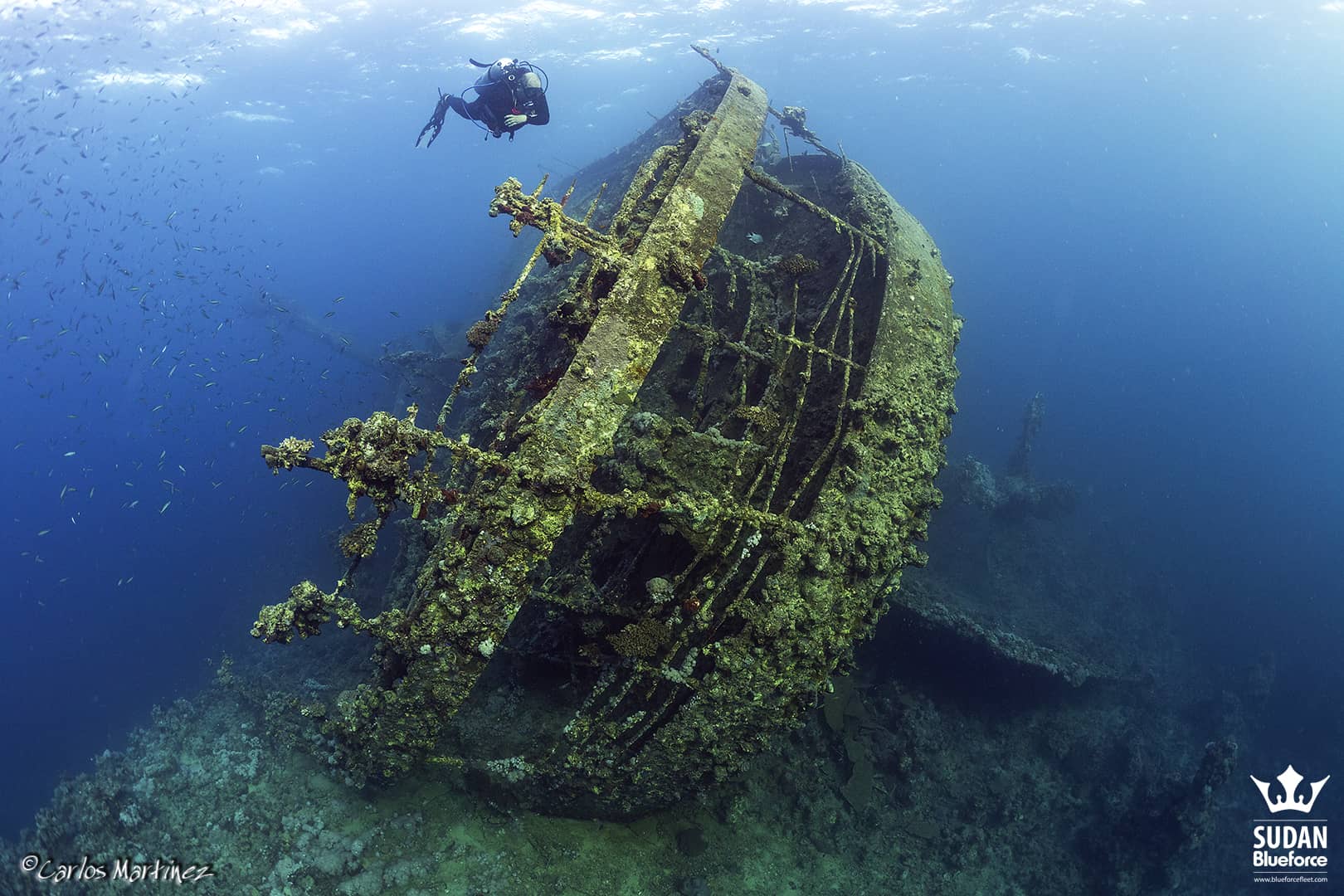
An intact Italian WWII shipwreck resting in crystal waters.
Umbria was a massive ship, completed and launched for the first time in 1911 in Hamburg, Germany, as a cargo and passenger vessel. It was over 150 meters long, accommodating 2,000 passengers and over 9,000 tons of cargo. It operated between Argentina and Europe under the name Bahia Blanca. In 1935, the Italian government purchased it and renamed it Umbria. Italy used it to transport goods and soldiers to its colonies in East Africa via the Suez Canal, passing through Sudanese waters. When World War II broke out in May 1940, Italy remained neutral, but the ship secretly carried cargo to support the defense of Italian colonies. The cargo was massive and valuable at the time: 360,000 pieces of explosives (ranging from 15 kg to 100 kg), 60 boxes of dynamite and fuses, construction materials, a total of 8,600 tons of weapons, in addition to three luxury Fiat Lancia cars. With this secret cargo, Umbria sailed towards Massawa (as Eritrea was an Italian colony at the time). From there, the cargo was supposed to be distributed to different parts of Asia. To cover its mission, 1,000 tons of coal and water were loaded in Port Said to make it look like a regular cargo ship. Britain, which controlled the Suez Canal, delayed the ship for three days to inspect the cargo. It knew that Italy was about to join the war, but since it was still neutral, it was allowed to carry weapons to its colonies. After the inspection, Britain allowed the ship to pass under British naval escort.
Three days later, Umbria entered Sudanese waters. There, once again, the British Navy ordered it to stop off the coast of Port Sudan under the pretext of smuggling. A crew of 20 British officers boarded the ship and inspected it thoroughly without finding anything suspicious. They then asked the Italians to stay on board overnight. The Italian captain realized that Britain would seize the ship and use its cargo against his country, and he knew he had only a few hours before Britain officially declared war on Italy, as news spread slowly back then. He acted quickly and ordered his crew to start emergency procedures. The British saw this as reasonable, thinking it would only delay the ship, and helped with the evacuation, boarding lifeboats with the Italian crew. Meanwhile, Captain Muiesan ordered his engineers to open all valves and deliberately scuttle the ship in the same spot. Slowly and intentionally, Umbria sank to the seabed loaded with its precious cargo—sacrificed for Italy.
When interrogated, the British asked the captain why he scuttled the ship. He simply replied: 'Because you are our enemies!' A day later, the entire crew was transferred to India where they spent four years in prison. Today, Umbria rests intact on the seabed, 30 km off the coast of Port Sudan. What distinguishes it is that it did not suffer any destruction; it still retains all its cargo and the explosives within it. Shipwreck enthusiasts consider it one of the most beautiful sunken ships in the world, as its entire hull is still preserved, which is rare. Coral reefs have grown over it, adding extra beauty. Divers can still see Umbria's cargo and the reef formations inside it. However, Italian sources warn divers against touching anything, because the massive amount of explosives on board could destroy Port Sudan if detonated. Whether this is fact or exaggeration remains unclear. Most visitors to Umbria are Italian tourists, who see it as a heroic national symbol. The abundance of marine life, coral reefs, and clear waters of the area also attract divers, making it a truly rare and special diving destination.
Glimpses into the silent world of the Umbria
Best season: October to May; visibility inside the wreck depends on calm seas.
Advanced certification required — depths down to 36 m with wreck penetration.
Never touch the ammunition or any part of the wreck — it is a protected historic site.
Message us for a quote that suits you — our team will prepare a tailored offer for your trip and group size.
Real experiences from our Red Sea trips.
so good
I love blue shark very mutch
I used to go very nice trips with blue shark since 10 years ago they are the best in this field. am so proud that we have such national company like them ❤️

❤️